



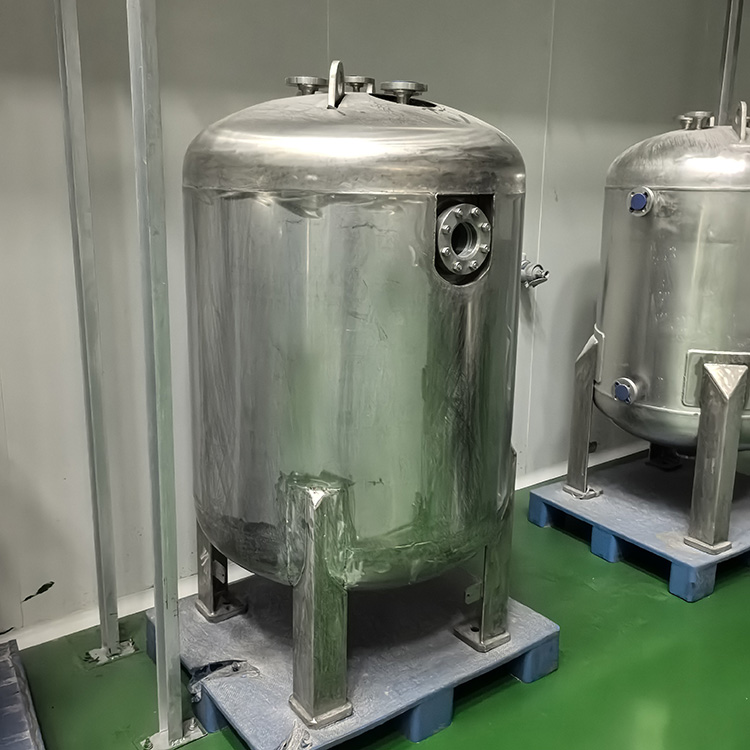
Custom Storage Tanks
Custom Storage Tanks Custom storage tanks are engineered vessels designed according to specific requirements for storing, processing, or temporarily holding liquids, gases, powders, or other industrial materials. Compared with standard tank...
Custom Storage Tanks
Custom storage tanks are engineered vessels designed according to specific requirements for storing, processing, or temporarily holding liquids, gases, powders, or other industrial materials. Compared with standard tanks, customized designs can better match specific capacities, materials, operating conditions, installation spaces, and process requirements.
Purpose of Custom Storage Tanks
Storage tanks are widely used in:
Chemical processing
Food and beverage production
Water treatment
Pharmaceutical manufacturing
Petroleum and energy industries
Agricultural processing
The tank design should be based on the characteristics of the stored material and the actual operating environment rather than relying only on standard dimensions.
Material Selection
Material selection is one of the most important aspects of tank customization.
Common materials include:
Stainless steel
Carbon steel
Aluminum
Polyethylene
FRP
Stainless steel is commonly selected when corrosion resistance, cleanliness, and long service life are required. Carbon steel may be suitable for applications where structural strength and cost efficiency are priorities.
The material must be compatible with the stored medium to prevent corrosion, contamination, leakage, or premature failure.
Capacity and Dimensional Design
Custom tanks can be manufactured according to required storage capacity and available installation space.
Important parameters include:
Tank diameter
Overall height
Wall thickness
Working volume
Maximum filling level
Customized dimensions help optimize factory layouts and improve material handling efficiency.
Structural Design
A custom storage tank may include:
Tank shell
Top and bottom structure
Support legs
Manholes
Inlet and outlet connections
Drain ports
Inspection openings
The structural design should provide sufficient strength under expected loading conditions.
Pressure and Temperature Requirements
Operating conditions must be clearly defined before manufacturing.
Important factors include:
Internal pressure
Vacuum conditions
Operating temperature
Design temperature
External environmental loads
The tank wall, reinforcement structure, and connections should be designed according to the specified pressure and temperature conditions.
Internal and External Surface Treatment
Surface treatment can improve corrosion resistance and service life.
Common solutions include:
Polishing
Electropolishing
Protective coatings
Passivation
Internal lining
For food, pharmaceutical, or high-purity applications, smooth internal surfaces can help reduce contamination and simplify cleaning.
Accessories and Process Connections
Custom tanks can be equipped with various accessories according to application requirements.
These may include:
Level gauges
Temperature sensors
Mixing systems
Heating or cooling jackets
Spray balls
Safety valves
The accessories should be properly matched with the tank structure and operating conditions.
Manufacturing and Welding Quality
For metal tanks, welding quality is critical.
Manufacturing inspection may include:
Dimensional inspection
Weld inspection
Surface inspection
Leak testing
Pressure testing when applicable
Proper welding procedures help maintain structural integrity and reduce leakage risks.
Quality Control
A complete quality control process should cover:
Raw material verification
Fabrication inspection
Welding inspection
Dimensional verification
Final performance testing
Technical documentation
The finished tank should be inspected against approved drawings, specifications, and applicable standards before delivery.
Conclusion
Custom storage tanks provide flexible solutions for industrial storage and process applications.
Through appropriate material selection, capacity optimization, structural engineering, surface treatment, accessory matching, and quality inspection, manufacturers can develop tanks suited to specific production environments.
A professionally engineered custom storage tank can provide reliable operation, improved process efficiency, and long-term service performance.
References
ASME BPVC Section VIII – Rules for Construction of Pressure Vessels
API 650 – Welded Tanks for Oil Storage
API 620 – Design and Construction of Large, Welded, Low-Pressure Storage Tanks
ASTM A240/A240M – Stainless Steel Plate, Sheet, and Strip for Pressure Vessels and General Applications
ISO 9001 – Quality Management Systems Requirements
EN 13445 – Unfired Pressure Vessels